
Meta’s Muse, Grok’s Bots and Dots are the AI agents everyone is talking about. They book, buy, write and organise for the people who use them, and they’re starting to pick up the phone: Muse already rings businesses. When an agent calls, whoever answers will ask what a good receptionist always has: who’s calling? Telephonist ID lets a call answer it, and show that a real person sent it, without handing over that person’s details.
What is Muse?
Meta launched Muse in the US on 8 September 2026. It’s an agent that sends emails, makes purchases and books travel for the person using it, and within days it had climbed to No. 2 in the US App Store charts. On 16 September Meta let Muse ring US businesses, starting with the users who had asked for it. Booking a salon appointment is a typical job.
What are Bots?
Bots are Grok’s always-on agents, in beta since 11 August. Each Bot gets its own computer in the cloud, signs into the apps and websites you give it, and keeps working when your laptop is closed. Show a Bot a task once and it can repeat it, and a “Chief of Staff” Bot can hand work to the others. You message your Bots from your phone or computer.
What are Dots?
The first Dots arrived on 29 September: always-on agents inside ChatGPT that schedule meetings, book travel, keep budgets and write code while you get on with your day. They come with the Pro and Business Premium plans. Talking to them by phone and text is on the way, with no date yet.
Why it matters to the business that answers
As agents reach the phone, each call lands on a real business, often a small one, where someone at the desk has a second to decide whether to trust it. On most AI calls today, three things are unclear.
- Is it an AI? Not every agent says what it is when it rings.
- Is it really an AI? On 22 September Reuters reported that Meta had tested a “human concierge”, with contractors placing some Muse calls themselves. Meta said it would roll that out only “with the proper disclosures”, without saying what they would be or who would hear them.
- Did a real person ask for it? There are only so many people, but there’s no limit to how many agents one person, or one script, can run. A restaurant holding its last table, or a clinic with one cancellation slot, needs to know a real customer is on the other end, not software filling a diary.
How Telephonist ID helps
Every call Telephonist makes, including the calls people ask for from ChatGPT, says it’s an AI assistant and carries Telephonist ID. When asked, our AI gives a six-character reference. Whoever answers can enter it, with the number we called, at telephonist.ai/check and see who stands behind the call.
- Proof of Payment: a paying customer asked for it.
- Proof of Human: a real, unique person asked for it, verified once.
- Proof of Identity: at the highest level, the name the caller gives matches their passport. This comes from our iPhone app, now in beta.
- Accountable: the company that answers for the call, Benaiah AI Ltd.
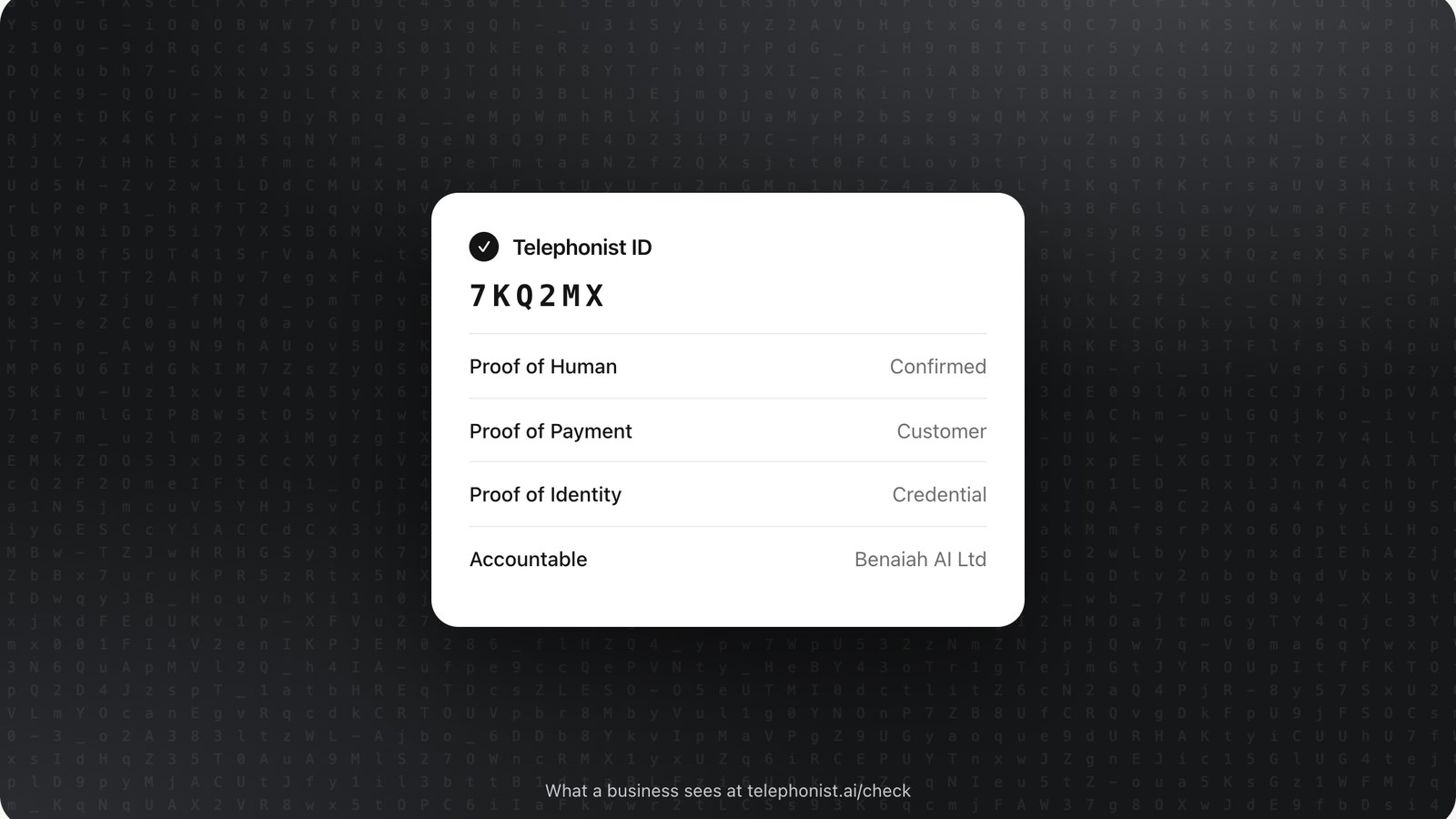
Each call is signed, so a check can’t be faked, and the business learns what it needs to trust the call rather than the caller’s personal details.
Telephonist ID in the real world
Businesses choose what reaches them. At their front desk they decide which AI calls placed through Telephonist get through: anyone, Proof of Payment and above, Proof of Human only, or none. Calls below the bar are refused before we dial.
People stay in charge too. When someone asks ChatGPT to make a call through Telephonist, they approve it before it’s made, and the check shows the business what they approved.
This covers calls placed through Telephonist. It doesn’t detect or block AI calls from other companies, or scam calls.
Building with Telephonist ID
Software can check our calls too. Every call is signed, and anyone can verify the signature with our public key. A public status list says whether each call is still valid, under review or withdrawn. The key, the status list and plain-English notes on how checks work are at telephonist.ai/developers.
What’s next
More agents will ring more businesses, and businesses will grow wary of calls they can’t place. The agents that can show a real person behind them will get through, and the rest will be screened out. Telephonist answers every call for the businesses that hire it, and proves every call it makes.
Hire your Telephonist for £1, check a call or verify yourself.